The 2010 penny value is not built on the date alone. Most 2010 cents are common. The better coins sit in a different group. That group includes strong red business strikes, proof pieces, satin-finish Mint Set coins, and a small number of certified top-grade survivors. The useful question is not “Is a 2010 penny rare?” The useful question is “Which 2010 penny do you have?”
Why 2010 Matters
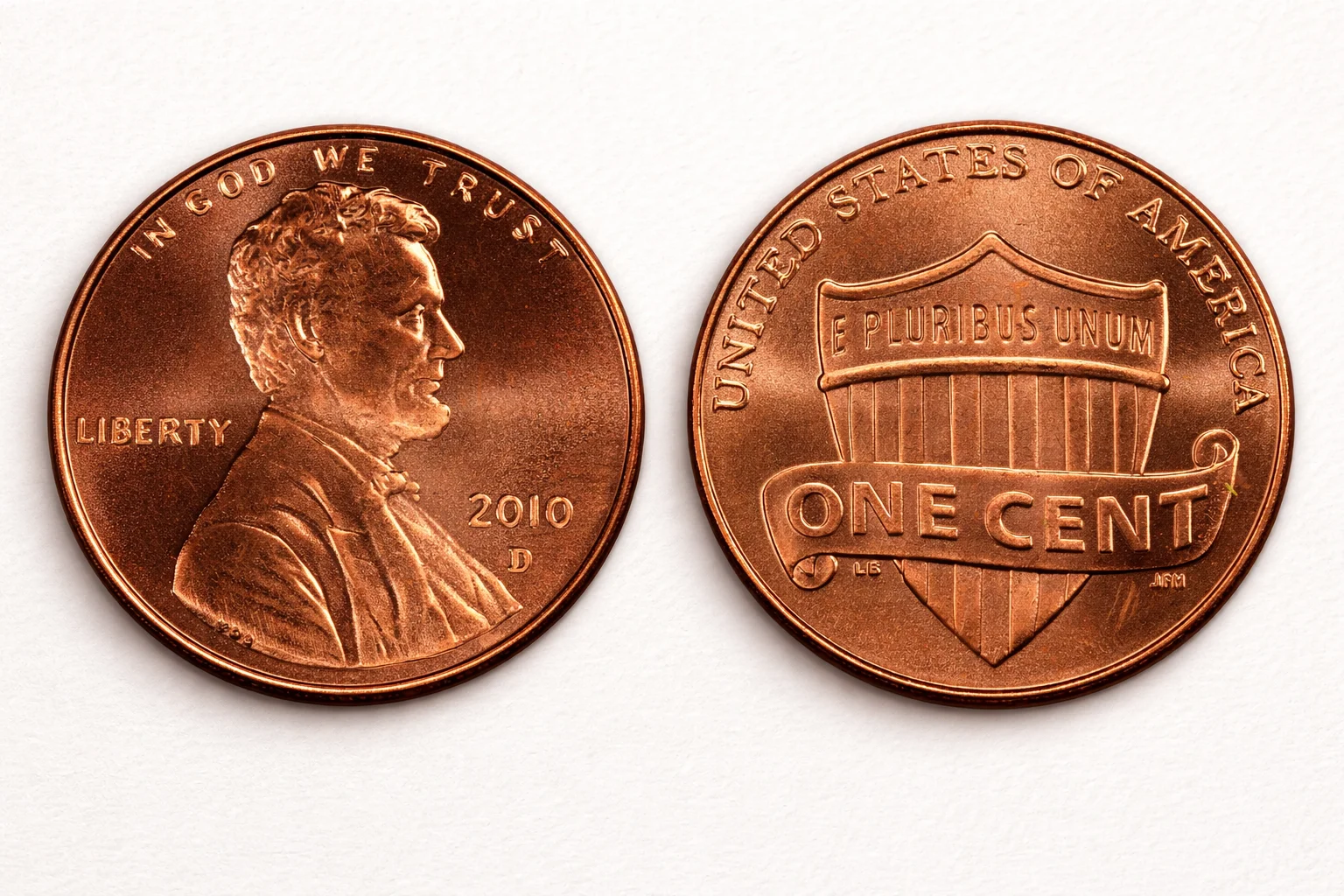
2010 was the first year of the Union Shield reverse. That gives the coin a clear place in the modern Lincoln cent series. It is a first-year type coin. That point matters to collectors. It does not make ordinary circulation pieces scarce.
This year also matters because the market is split into several formats. There are regular Philadelphia and Denver circulation strikes. There is a San Francisco proof. There are also satin-finish pieces from the Mint Set. Each one belongs in a different value lane.
Start with the Type, not the Price
Many bad estimates begin with one mistake. People treat every 2010 cent as the same coin. That is where confusion starts.
The main 2010 penny formats
| Type | How it was issued | Basic market level |
| 2010, no mint mark | Philadelphia business strike | Common |
| 2010-D | Denver business strike | Common |
| 2010-S Proof | Sold in Proof Sets | Collector issue |
| 2010 Satin Finish | Sold in Mint Sets | Separate collector issue |
| 2010-D Satin Finish | Sold in Mint Sets | Separate collector issue |
Philadelphia struck 1,963,630,000 regular cents. Denver struck 2,047,200,000 regular cents. The 2010-S proof mintage was 1,689,216. The satin-finish Philadelphia and Denver coins each list 583,897 pieces. Those numbers explain the market shape right away. The regular coins are abundant. The collector formats are much scarcer, even if they are not rare in an absolute sense.
What Is Common
The common material is simple.
Common 2010 penny material
- Circulated 2010 cents
- Circulated 2010-D cents
- Average raw, uncirculated pieces
- Spotted or stained modern zinc cents
- Weak-looking examples with dull color
That group makes up most of the surviving supply. These coins were made in huge numbers. Many were saved in rolls. Many remain easy to find in low Mint State. Retail guides still place ordinary uncirculated 2010 and 2010-D pieces around the low-end modern range, with USA Coin Book using about $0.36 or more in Uncirculated condition as a basic estimate for each.
That is the first reality check. A normal 2010 penny is not valuable because it is old. It is not old. It is not scarce. It is a modern cent with very high survival. Face value, or a small premium, is the normal result for the average coin.
What Creates a Premium
The premium starts when the coin is clearly better than the mass of other examples from the same year.
1. Grade
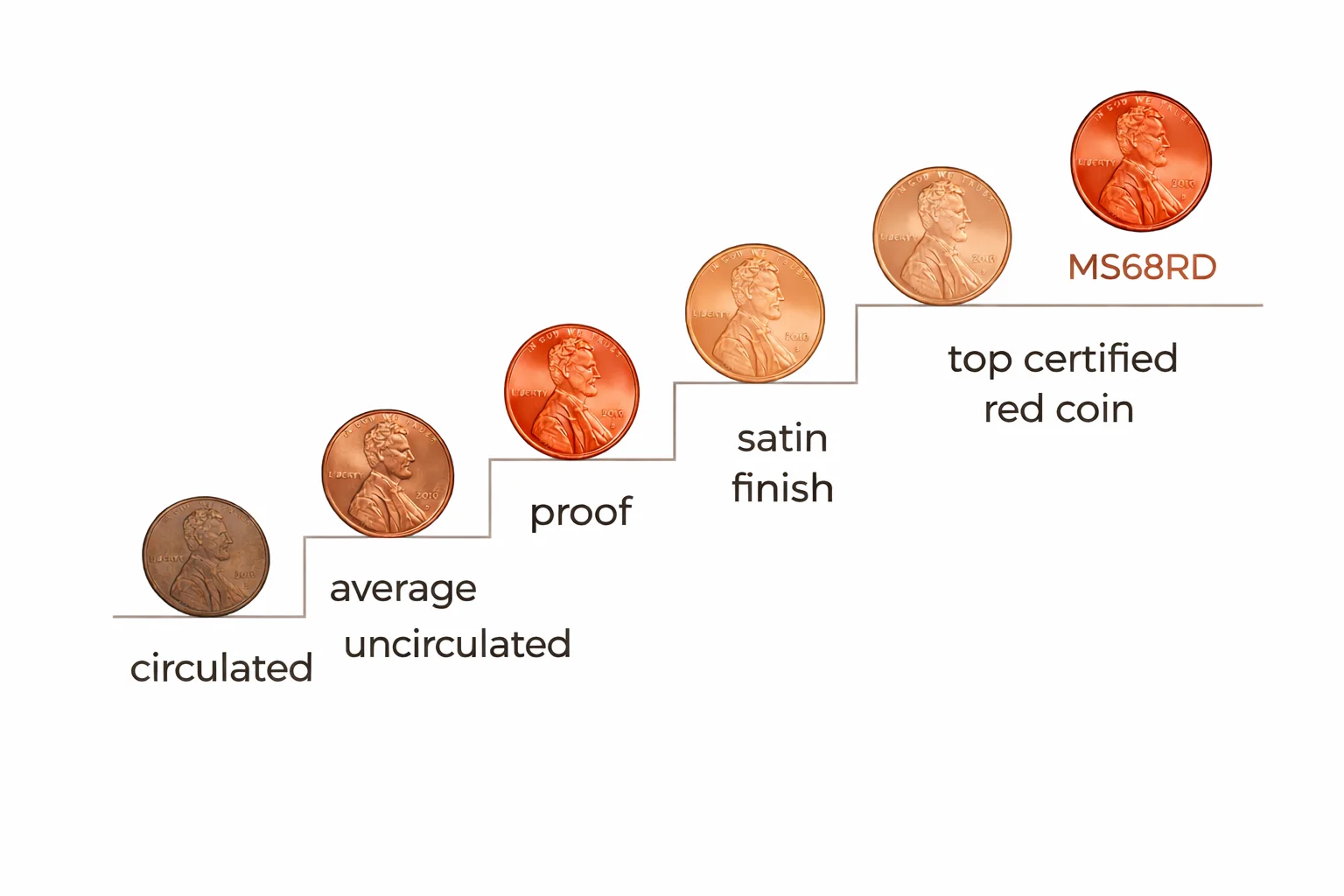
Grade is the main divider. A coin that looks “uncirculated” to a beginner may still be far from a premium piece. Marks on Lincoln’s cheek, busy fields, weak luster, or poor eye appeal pull modern cents down fast. The market pays up for coins that look cleaner, sharper, and fresher than average.
2. Color
Color matters a great deal on modern Lincoln cents. Red coins bring more attention than dull red-brown or brown pieces. This is one reason many raw 2010 cents stay cheap. The coin may be uncirculated, but it no longer has the bright look collectors want.
3. Surfaces
Surfaces decide whether a coin looks premium or average. Small marks, haze, spots, and rough fields hurt modern cents more than many beginners expect. This is a visual market. Two coins can share the same date and mint mark and still sit in very different price ranges because one looks clean and one does not.
4. Format
Proof and satin-finish coins should not be judged like pocket-change coins. They were sold as collector products. Their value comes from a different place. The proof is a mirror coin from San Francisco. The satin-finish pieces came from Mint Sets and were not released into circulation.
What changes value fastest
| Factor | Weak example | Strong example | Effect on value |
| Grade | average raw coin | top certified grade | biggest jump |
| Color | dull, spotted | bright red | strong jump |
| Surfaces | marked, busy | clean, smooth | strong jump |
| Format | common business strike | proof or satin finish | clear jump |
| Certification | none | market-accepted slab | helps premium coins most |
This table is the real value map. Date alone is near the bottom. Quality sits at the top.
Value by Type
A value article should separate the main groups. That is the cleanest way to keep hype out of the picture.
2010 no mint mark
The regular Philadelphia coin is common. In circulation, it is worth its face value. In ordinary raw, uncirculated condition, retail guides still keep it close to the low modern-cent range. Higher-grade certified examples can move much higher, but that is a small niche, not the normal outcome. PriceCharting shows only modest numbers in the lower Mint State range, while PCGS records a much stronger auction result only for a top-end MS67RD coin.
2010-D
The Denver circulation strike follows the same broad pattern. Most are common. The coin becomes more interesting only when it is unusually clean or certified at the top of the grade ladder. The record side of the market can look dramatic, but those results come from the narrow top-pop end, not from ordinary coins. PCGS lists an auction record of $4,994 for a 2010-D MS67 example, which tells you how strongly the market can reward the very best survivors. It does not mean the average 2010-D cents are expensive.
2010-S Proof
The San Francisco proof is different from the start. It was made for collectors. It has mirror fields and a separate market. USA Coin Book places the basic proof value around $4.96 or more, while PriceCharting puts ungraded pieces near the same general level and shows stronger numbers only in high certified proof grades. The normal proof is not rare, but it is still more collectible than a common circulation strike.
2010 Satin Finish and 2010-D Satin Finish
These are the most overlooked 2010 cents. They came only from Mint Sets. They were not made for change. PriceCharting shows a much higher base market level for these than for standard business strikes, with the Philadelphia satin-finish coin listed around $34.95 ungraded and the Denver satin-finish piece around $59.00 ungraded. That does not make them elite rarities. It does show that the market treats them as a separate collector format.
Quick value view
| Type | Typical lower-end market view |
| 2010 / 2010-D circulated | face value |
| 2010 / 2010-D average raw uncirculated | small premium |
| 2010-S Proof | around the low single-digit collector range |
| 2010 Satin Finish | noticeably above common raw business strikes |
| 2010-D Satin Finish | usually stronger than the Philadelphia satin issue |
| Highly certified grades | separate market, can jump sharply |
The key point is simple. Common coins stay common. Special formats and top grades create the larger premiums.
What Is Just Hype
A lot of the 2010 penny talk online is noise. The year attracts first-year reverse interest, and that pulls in weak claims.
Claims that do not hold up well
- “It is the first shield year, so every coin is valuable.”
- “Any 2010-D is scarce.”
- “Any strange texture is a mint error.”
- “All uncirculated pieces should be graded.”
- “Online asking prices prove market value.”
These claims push ordinary coins into unrealistic price talk. Large mintages and wide survival make it hard to support. The market is selective. It rewards the better coin, not the date by itself.
Real premium vs hype
| Claim | Reality | Collector takeaway |
| First-year reverse means rare | not with billion-coin mintages | collect it, but do not overpay |
| D mint mark means key coin | not by itself | condition matters more |
| Uncirculated equals valuable | Many modern UNC cents are cheap | quality still decides |
| Odd surface means error | often damage or plating trouble | Verify before buying |
| A high asking price means real value | sold prices matter more | stay grounded |
This is where many beginners lose money. They buy the story instead of the coin.
Errors and Varieties: What Matters, What Usually Does Not
Errors can add value. Weak claims about errors do not.
Errors that may matter
- Clear off-center strikes
- Wrong planchet pieces
- Strong, attributed doubled dies
- Major struck-through errors
- Dramatic multi-strike or broadstrike pieces
Things often mistaken for valuable errors
- Plating bubbles
- Stains
- Corrosion
- Scratches
- Hits from circulation
- Machine doubling
- Random rough texture
The modern copper-plated zinc cent is especially noisy in this area. Surface problems are common. Collectors should be careful with coins that look odd but have no real mint-error profile. A coin must be clearly mint-made, not simply damaged later.
Error screening table
| May add value | Usually does not add value |
| attributed doubled die | plating blisters |
| off-center strike | scratches |
| wrong planchet | stains |
| broadstrike | corrosion |
| major struck-through | weak machine doubling |
This is one of the most useful filters in the whole article. Many 2010 cents get mislabeled because the owner wants the coin to be special. Most are not. The better path is slow screening and strong proof.
Should you keep it, sell it, or grade it?
This part matters more than broad value talk.
Keep it if:
- The coin is bright red
- The surfaces are clean
- The strike looks sharp
- It is a proof or satin-finish example
- It appears far better than average
- It may have a real variety or an error
Sell or spend it if:
- It is circulated and ordinary
- It has spots or an ugly color
- The fields are busy
- It has no collector format
- The coin looks easy to replace
Think about grading only if:
- The coin looks top-tier for the issue
- The color is still strong
- The surfaces are notably clean
- The coin is already in the high-end part of the market
- A real variety needs formal attribution
Modern coins punish weak grading decisions. The submission cost can exceed the coin’s real value very quickly. That is why ordinary 2010 cents are usually better as album pieces, not grading candidates.
How to Screen a 2010 Penny Before You Overpay
A fast first pass saves time. It also cuts down on hype.
Use this order
- Identify the type
- Check the mint mark
- Separate business strike, proof, and satin finish
- Look at the color
- Inspect surfaces
- Decide if the coin is clearly above average
- Compare against the sold-market logic, not wishful pricing
A free coin value checker can help with the first pass, especially when you are sorting modern cents in volume. It can help confirm the date, mint mark, and broad category before you spend more time on the coin. Coin ID Scanner can also help at that stage by identifying the coin from a photo, showing a basic coin card, and logging it into a collection for later review. That does not replace grading skill. It helps with sorting.
What to look for under the light
- Bright, stable red color
- Fewer marks on Lincoln’s cheek
- Calmer fields
- Better visual balance
- No obvious spots
- Stronger overall eye appeal
Small details decide the market result. Modern cents are common enough that collectors can be selective. That gives the cleaner coin the edge.
Three Sensible Ways To Collect 2010 Cents
A good article should end with the collector’s use, not only price talk.
1. The simple type set route
This is the easiest path.
You keep:
- One nice 2010
- One nice 2010-D
- One 2010-S Proof
- One satin-finish coin
- One 2010-D satin-finish coin
This gives you the full structure of the year without chasing expensive top grades. It is practical and complete.
2. The quality-first route
This path ignores ordinary coins and waits for better surfaces.
You focus on:
- Red color
- Cleaner fields
- Stronger strike
- Proof quality
- Eye appeal
This is the smarter route for many collectors. It keeps the box smaller and the average quality higher. No clutter. No weak duplicates.
3. The specialist route
This route is for collectors who enjoy modern grading and variety hunting.
You target:
- Top certified business strikes
- Proof grade upgrades
- Satin-finish grading
- Attributed varieties
- Major errors only
This route costs more. It also demands discipline. The upside is real, but only at the high end.
Final Read on 2010 Penny Value
The real answer is plain. Most 2010 pennies are common. Most 2010-D pennies are common, too. The proof is more collectible. The satin-finish pieces are more overlooked and often more interesting than the standard circulation coins. The larger premiums come from strong grade, red color, cleaner surfaces, and the right format. Hype starts when people ignore those basics.A normal 2010 cent is not a hidden prize. A clearly superior 2010 cent can be. That is the split that matters. A coin identification app can help with the first sort, but the final judgment still comes from the coin itself: type, color, strike, surfaces, and market level.